
Define the governance scope
Confirm the obligations, process owners, methodology and approved source material. Agree the Saudi and Arabic operating requirements with the institution’s responsible specialists.
Aliph GRC
Implement obligations, policies, risks, controls and assurance on customer-approved infrastructure, with five connected products and one evidence lifecycle from requirements to reporting.

Aliph GRC connects governance practice with working software. Policy owners, risk teams and reviewers share a consistent record of requirements, decisions and evidence. The implementation brings Saudi and Arabic operating context into the workflow, while the institution’s authorised specialists determine applicable obligations and approve formal conclusions.
For institutions connecting policy ownership, enterprise risk, control assurance and tender governance through software.
Build the approved obligation scope and governance inventory with accountable owners. Map customer-selected PDPL requirements and relevant SAMA, NCA, CMA or CBAHI obligations into records your teams can maintain. Work with Arabic source material and the institution’s operating terminology. Connect policies to requirements and manage drafting, review, approval, publication and attestation through a defined lifecycle.
Configure a consistent taxonomy, assessment approach, appetite, indicators and control records. Connect testing, evidence, incidents and findings to the risks they inform. Give reviewers the supporting context needed to assess control effectiveness and approve treatment decisions.
Use governed registers and approved source records to support draft assessments, board reports and regulatory submission material. Preserve source relationships and make gaps visible. Named owners review the evidence, approve conclusions and authorise any external release.
Implement the GRC operating model on the infrastructure and deployment profile approved by the institution. Confirm identity, access, source integrations and processing arrangements. Train policy owners, assessors and reviewers to maintain both the records and their responsibilities.
All five connected GRC products use this sequence. Each stage preserves its relationship to the evidence and the person responsible for the next decision.
A governance team selects a requirement, links its risk and control, and records a test with supporting evidence. A finding leads to an assigned action. Agentic Studio uses the reviewed register to prepare a draft management report, while AliphChat helps an authorised reviewer inspect the underlying policy and evidence.
This illustrative workflow tests the complete chain from requirement to reporting. The responsible owners validate evidence, approve closure and authorise the final report; incomplete records remain visible for resolution.

Agree the scope, responsibilities and acceptance criteria together. The delivery plan brings business context, implementation and review into the same conversation.
Confirm the obligations, process owners, methodology and approved source material. Agree the Saudi and Arabic operating requirements with the institution’s responsible specialists.
Design the requirements, risk, control, test, finding, action and reporting relationships. Assign ownership, review authority and the evidence needed at each stage.
Implement the selected products and integrations on approved infrastructure. Walk through a representative case, including rejected evidence, an overdue action and a report awaiting approval.
Train contributors and reviewers, confirm record maintenance and reporting responsibilities, and hand over the configured workflow with acceptance evidence and change guidance.
Deliverables are confirmed in the agreed scope. They can include:
These inputs help turn an initial discussion into a focused scope.
Trace a requirement through the seven stages, check evidence quality and ownership, and verify that reviewers can explain each assessment and reporting conclusion. Formal decisions and approvals remain with authorised institutional owners.
Policy Vault, Aliph Risk & Compliance, Agentic Studio, Pursuit & Proposal Intelligence and AliphChat connect policy, assurance, tender and enterprise records through the same evidence lifecycle. Select the implementation scope around the work your institution needs to run.
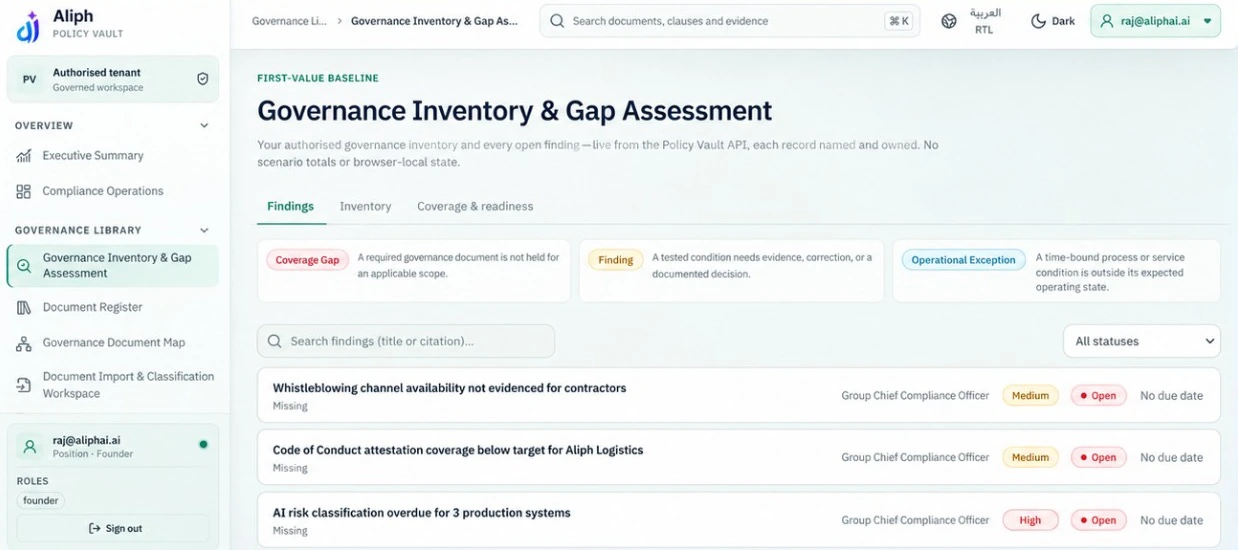
Know what is approved, where coverage is missing and who needs to act. Policy Vault connects your governance inventory to review, publication and attestation, so the policy stays connected to the people responsible for it.
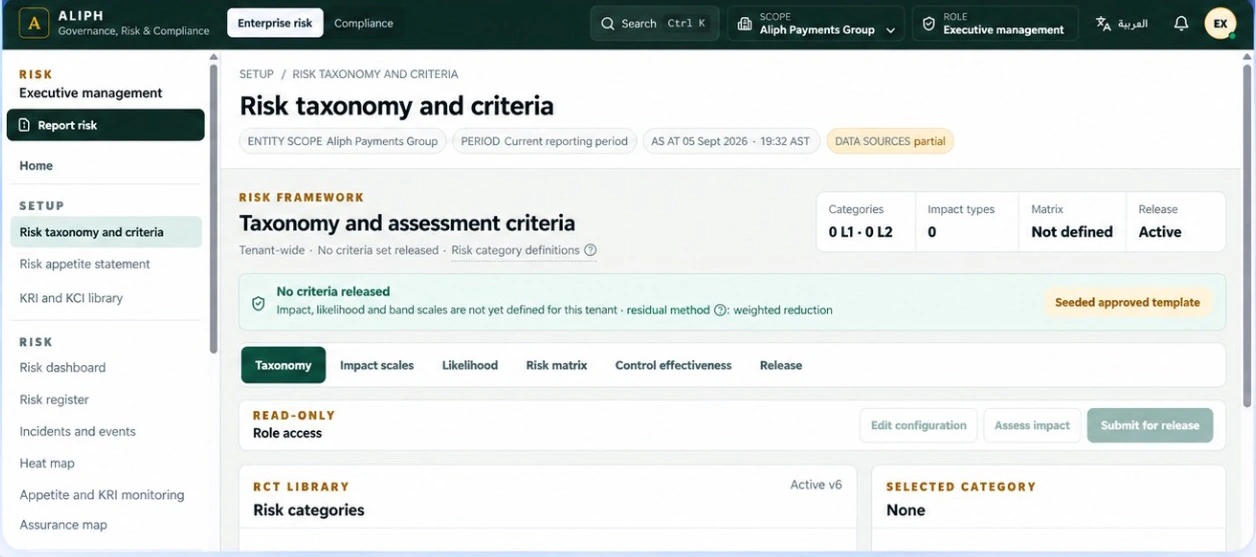
Bring risk appetite, control performance and assurance into one connected view. Aliph Risk & Compliance helps teams explain the exposure, follow the evidence and put the next action in the right hands across the institution.
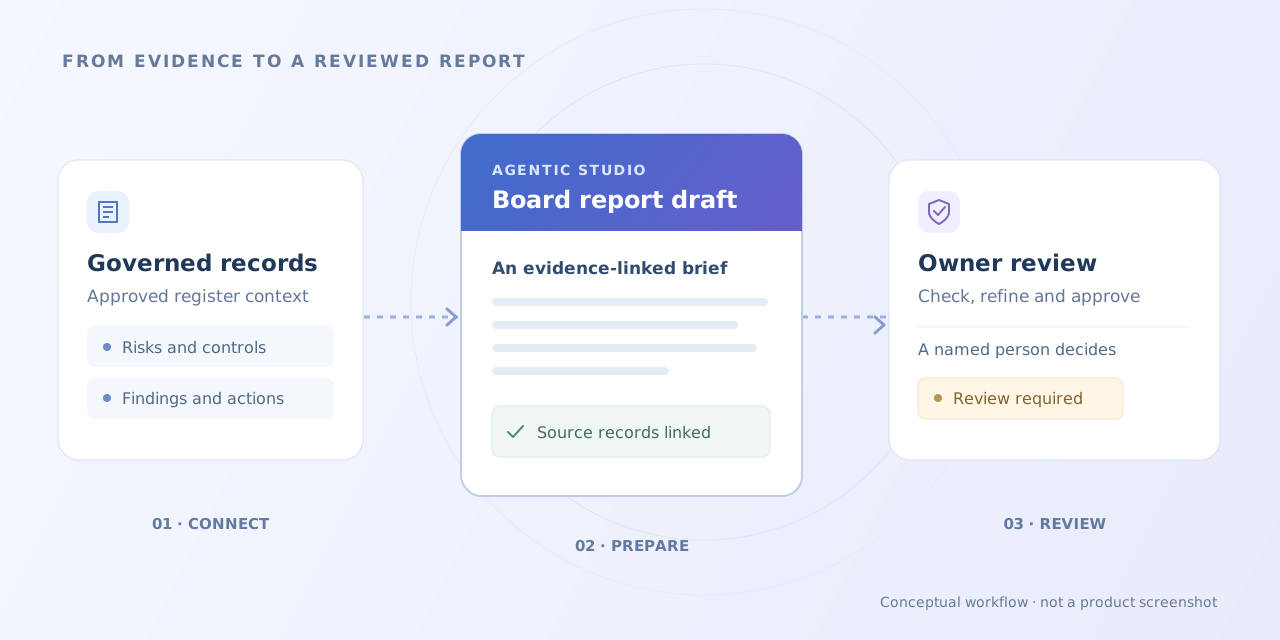
Start with the records your governance team already maintains. Agentic Studio prepares assessment, board report and regulatory submission drafts, giving reviewers the evidence, open questions and approval path they need to make the report their own.
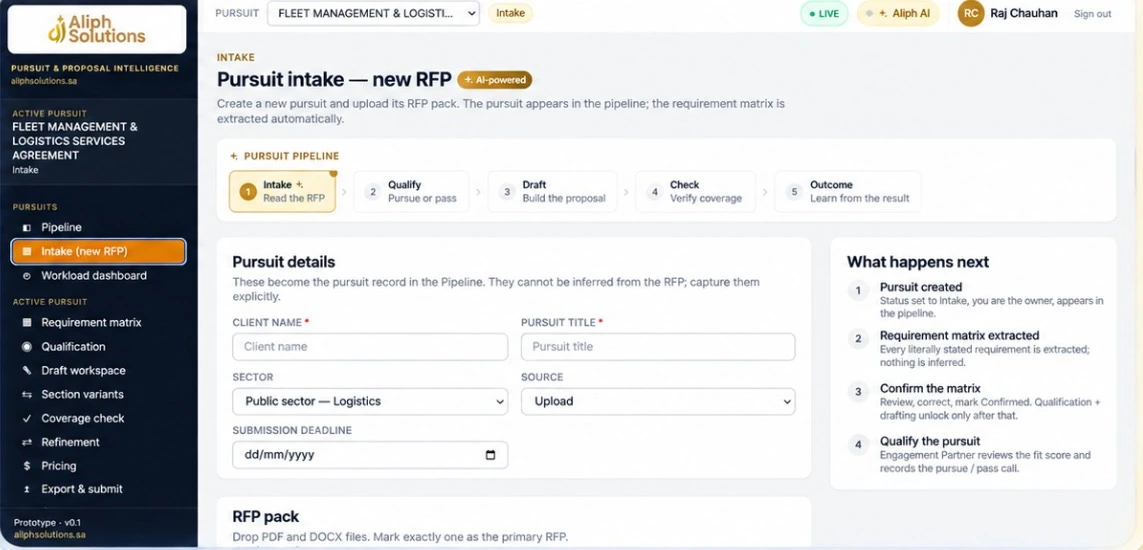
Give your bid team a clear path from the RFP pack to an approved response. Explore a product preview that keeps confirmed requirements, drafting, pricing and coverage review connected to the people authorised to commit.
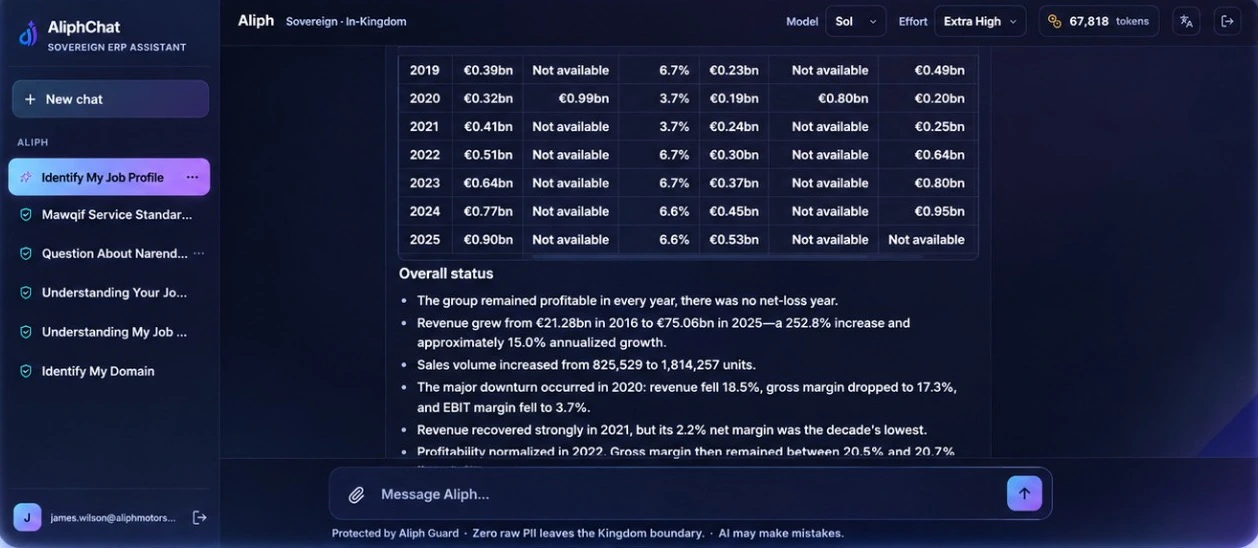
Bring ERP, CRM, policies and organisational memory into one conversation. AliphChat helps your teams understand what is happening, check the information behind the answer and decide what to do next across the business.
Policy Vault manages governance documents. Aliph Risk & Compliance holds the core register. Agentic Studio prepares evidence-based drafts, Pursuit & Proposal Intelligence governs tender work, and AliphChat provides the conversational front door across approved GRC, policy, ERP and CRM records. AI Consultant adds a separate compliance intelligence experience for structured questions and deliverables.
The engagement can work with Arabic obligations and the frameworks selected by the institution’s authorised specialists. Those specialists confirm applicability and interpretation. The software records the requirements, ownership and evidence relationships needed to operate the approved process.
The implementation can use customer-approved infrastructure and the agreed sovereign deployment profile. Hosting, model paths, identity, integrations and access are explicit design decisions. The required arrangement is confirmed against the institution’s technical and operating constraints.
No. Start with the products that support the chosen process, while preserving the common evidence lifecycle. A policy inventory or core risk register can provide the first scope, with other workflows added when their source records and owners are ready.
AI can assist with drafting and structured analysis from governed records. Named owners remain responsible for reviewing evidence, approving conclusions and authorising submissions. The implementation defines those checkpoints and the permissions available before any external action.
Start with an obligation, a policy cycle or an assurance process. We’ll connect the records, products and responsibilities needed to run it.
Start a conversation